


 Science Media Library
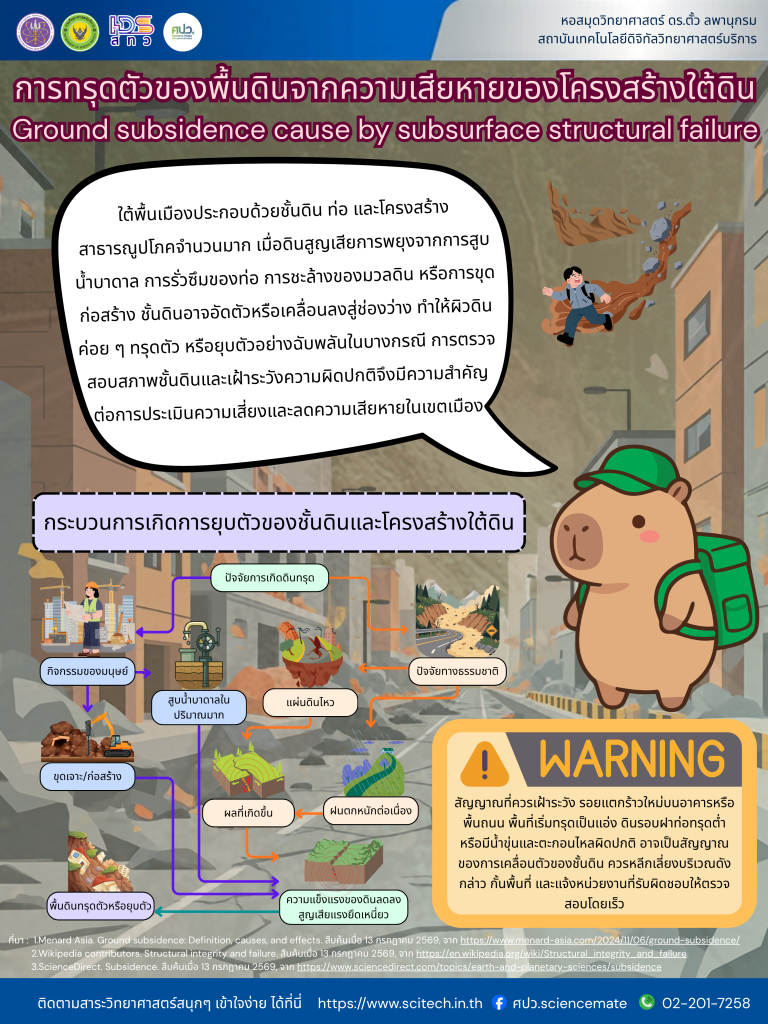
Ground Subsidence Caused by Subsurface Structural Failure
Quick Science Insight: Understand the process of ground subsidence in urban areas in just 1 minute! Why does the ground subside? Major cities have numerous pipes and underground structures. When the soil loses its cohesion and support (due to excavation, declining groundwater levels, or erosion from flooding), the soil layers compact or shift into empty voids, causing the surface above to collapse. 3 Warning Signs to Watch Out For: New cracks appearing on building walls or road surfaces Ground settling around manhole covers, or depressed areas forming on the surface Unusual outflow of muddy water and sediment By staying vigilant and regularly inspecting ground conditions, we can better assess risks and prevent severe damage. Follow fun and easy-to-understand science content at ศปว. Sciencemate #SciMate #ScienceFacts #Knowledge #HazardWarning
 Science Media Library
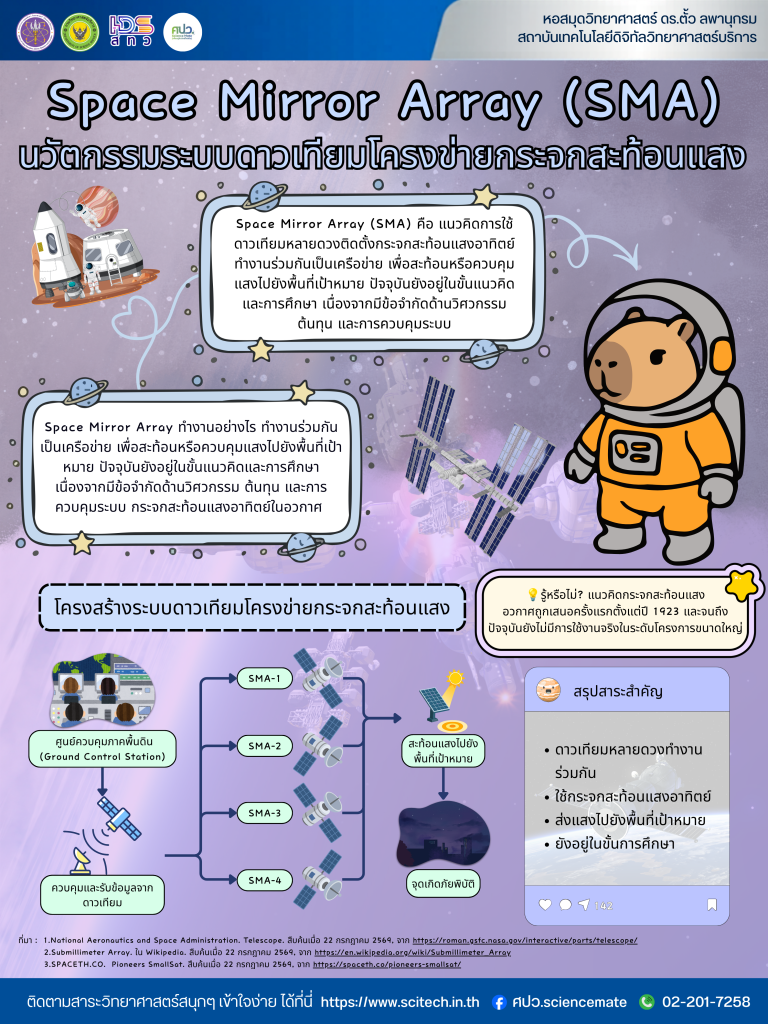
Space Mirror Array (SMA): The Satellite Mirror Network Innovation for Light Reflection
What if… we could direct sunlight from space to any desired area on Earth? Today, let’s explore the “Space Mirror Array (SMA)”—a space innovation concept designed to reflect and redirect sunlight to targeted locations on Earth. This technology could potentially be applied to support emergency operations in disaster-stricken zones or areas requiring special illumination. Although this technology is still in the engineering research and development phase internationally, it remains a highly futuristic concept worth keeping an eye on! Learn more about the Space Mirror Array and the possibilities of this technology below. #SpaceMirrorArray #SMA #SpaceInnovation #EasyScience #SciTech #SciMate
 Science Media Library
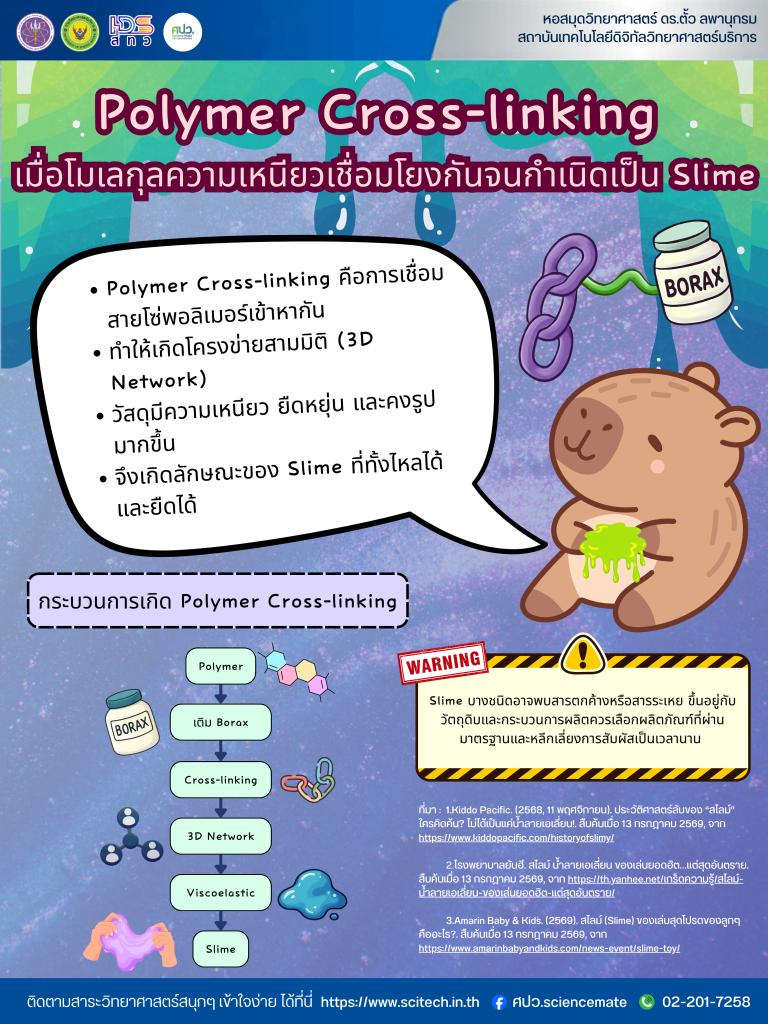
Polymer Cross-linking: When Sticky Molecules Interconnect to Create Slime
Have you ever wondered why adding Borax to a polymer liquid suddenly transforms it into an elastic mass that can both flow and stretch? This happens due to Polymer Cross-linking, a process that links polymer chains together into a 3D Network with Viscoelastic properties—combining both viscosity and elasticity at the same time! Beyond the fun, this toy comes with safety precautions regarding chemical residues and volatile compounds. Read the simple breakdown of how it forms in this infographic. Follow fun and easy-to-understand science insights at: https://www.scitech.in.th #Chemistry #Polymer #Science #Knowledge #SciMate
 Science Media Library
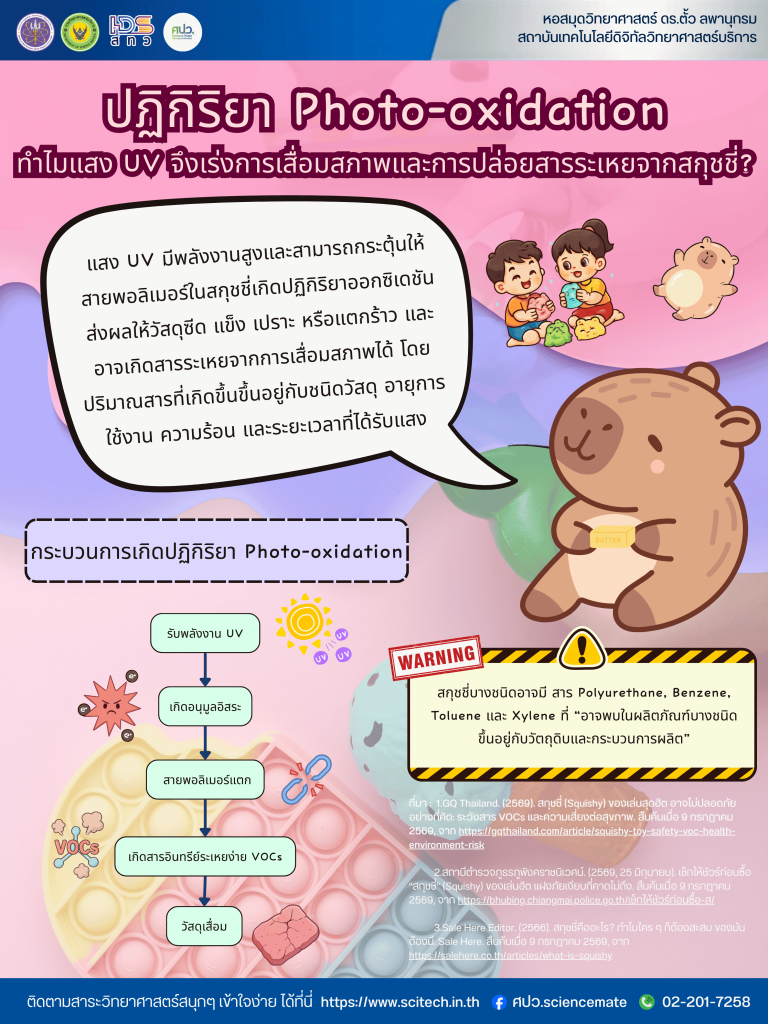
Photo-Oxidation Reaction: Why Does UV Light Accelerate Degradation and Volatile Chemical Release in Squishies?
Why do the squishies that kids love to play with become brittle, cracked, and emit strange odors after long exposure to sunlight? The answer lies in a scientific process called Photo-oxidation. UV light carries enough energy to react with the materials, causing them to degrade and release certain volatile organic chemicals. Today, we’ve summarized the reaction steps and the chemicals to watch out for in an easy-to-understand single image! Feel free to save and share this with your loved ones. #UsefulKnowledge #EasyScience #KidsToys #PhotoOxidation #SciMate
 Science Media Library
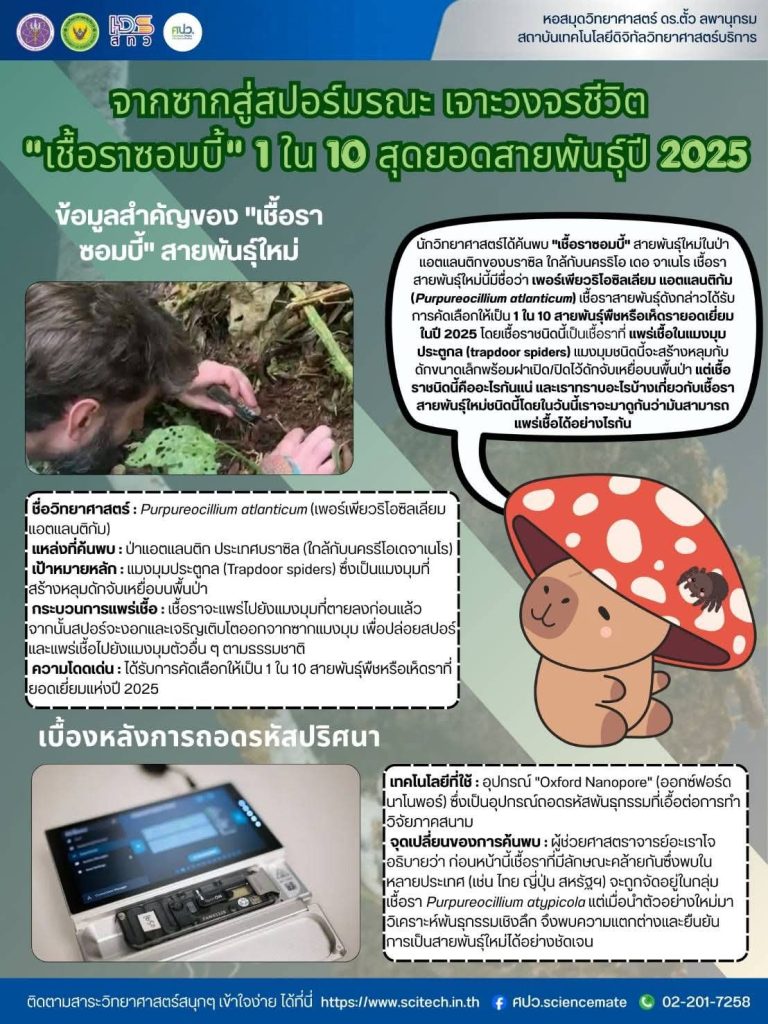
Spooky Yet Fascinating! Unveiling the Life Cycle of the New “Zombie Fungus” Species
SciMate delves into nature’s secrets to welcome 2025 with the discovery of an incredible new species, selected as one of the Top 10 Plant and Fungal Species of 2025! From spider remains to deadly spores, how does this fungus operate? Let’s find out. Scientific Name: Purpureocillium atlanticum Location: Atlantic Forest, Brazil (near North Rio de Janeiro) Primary Target: Trapdoor spiders, which are spiders that construct burrows to trap prey on the forest floor. Infection Process: The fungus infects spiders that have already died. Spores then germinate and burst out from the spider’s carcass to release more spores, spreading the infection to other spiders. Behind the Discovery: Scientists successfully sequenced and verified this new species thanks to the “Oxford Nanopore” device—a portable genomic sequencing technology ideal for field research. This allowed researchers to clearly distinguish this fungus from similar-looking fungal groups found in other countries Follow fun and easy-to-understand science content at: Facebook: ศปว.sciencemate Website: https://www.scitech.in.th Tel: 02-201-7258 #ZombieFungus #FunScience #SciMate #Sciencemate #TopSpecies2025 #OxfordNanopore
Ground Subsidence Caused by Subsurface Structural Failure
Quick Science Insight: Understand the process of ground subsidence in urban areas in just 1 minute! Why does the ground subside? Major cities have numerous pipes and underground structures. When the soil loses its cohesion and support (due to excavation, declining groundwater levels, or erosion from flooding), the soil layers compact or shift into empty voids, causing the surface above to collapse. 3 Warning Signs to Watch Out For: New cracks appearing on building walls or road surfaces Ground settling around manhole covers, or depressed areas forming on the surface Unusual outflow of muddy water and sediment By staying vigilant and regularly inspecting ground conditions, we can better assess risks and prevent severe damage. Follow fun and easy-to-understand science content at ศปว. Sciencemate #SciMate #ScienceFacts #Knowledge #HazardWarning
Space Mirror Array (SMA): The Satellite Mirror Network Innovation for Light Reflection
What if… we could direct sunlight from space to any desired area on Earth? Today, let’s explore the “Space Mirror Array (SMA)”—a space innovation concept designed to reflect and redirect sunlight to targeted locations on Earth. This technology could potentially be applied to support emergency operations in disaster-stricken zones or areas requiring special illumination. Although this technology is still in the engineering research and development phase internationally, it remains a highly futuristic concept worth keeping an eye on! Learn more about the Space Mirror Array and the possibilities of this technology below. #SpaceMirrorArray #SMA #SpaceInnovation #EasyScience #SciTech #SciMate
Polymer Cross-linking: When Sticky Molecules Interconnect to Create Slime
Have you ever wondered why adding Borax to a polymer liquid suddenly transforms it into an elastic mass that can both flow and stretch? This happens due to Polymer Cross-linking, a process that links polymer chains together into a 3D Network with Viscoelastic properties—combining both viscosity and elasticity at the same time! Beyond the fun, this toy comes with safety precautions regarding chemical residues and volatile compounds. Read the simple breakdown of how it forms in this infographic. Follow fun and easy-to-understand science insights at: https://www.scitech.in.th #Chemistry #Polymer #Science #Knowledge #SciMate
Photo-Oxidation Reaction: Why Does UV Light Accelerate Degradation and Volatile Chemical Release in Squishies?
Why do the squishies that kids love to play with become brittle, cracked, and emit strange odors after long exposure to sunlight? The answer lies in a scientific process called Photo-oxidation. UV light carries enough energy to react with the materials, causing them to degrade and release certain volatile organic chemicals. Today, we’ve summarized the reaction steps and the chemicals to watch out for in an easy-to-understand single image! Feel free to save and share this with your loved ones. #UsefulKnowledge #EasyScience #KidsToys #PhotoOxidation #SciMate
Spooky Yet Fascinating! Unveiling the Life Cycle of the New “Zombie Fungus” Species
SciMate delves into nature’s secrets to welcome 2025 with the discovery of an incredible new species, selected as one of the Top 10 Plant and Fungal Species of 2025! From spider remains to deadly spores, how does this fungus operate? Let’s find out. Scientific Name: Purpureocillium atlanticum Location: Atlantic Forest, Brazil (near North Rio de Janeiro) Primary Target: Trapdoor spiders, which are spiders that construct burrows to trap prey on the forest floor. Infection Process: The fungus infects spiders that have already died. Spores then germinate and burst out from the spider’s carcass to release more spores, spreading the infection to other spiders. Behind the Discovery: Scientists successfully sequenced and verified this new species thanks to the “Oxford Nanopore” device—a portable genomic sequencing technology ideal for field research. This allowed researchers to clearly distinguish this fungus from similar-looking fungal groups found in other countries Follow fun and easy-to-understand science content at: Facebook: ศปว.sciencemate Website: https://www.scitech.in.th Tel: 02-201-7258 #ZombieFungus #FunScience #SciMate #Sciencemate #TopSpecies2025 #OxfordNanopore