


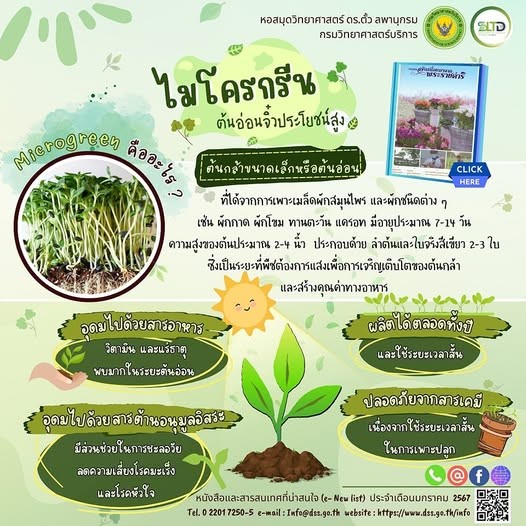
👀 Have you ever heard of “microgreens”? Some of you may already be familiar with them, while many others may have never heard of or known about microgreens ☺️ Today, the Science Library of the Department of Science Service will introduce you to microgreens—tiny plants packed with great benefits 👇🏻
🌱 What are microgreens?
Microgreens are young seedlings or small sprouts grown from the seeds of vegetables, herbs, and other plants such as mustard greens, spinach, sunflower, and carrots. They are typically harvested at around 7–14 days old, with a height of about 3–4 inches. At this stage, they consist of a stem and 2–3 true green leaves.
This is the stage where plants require light for growth and for developing their nutritional value. This differs from sprouts (such as bean sprouts), which are consumed as whole young plants, still relying on cotyledons (seed leaves) for stored nutrients, do not require light for growth, and are typically grown for only 3–7 days.
🌱 Benefits of microgreens
☘️ Rich in nutrients, vitamins, and minerals, especially in the early growth stage
☘️ High in antioxidants, which help slow aging and reduce the risk of cancer and heart disease
☘️ Can be grown year-round and require a short cultivation time
☘️ Generally free from chemicals, as their short growth period reduces the need for pesticides
Microgreens can be used in a variety of dishes—for example, blended into smoothies, sprinkled on soups, or added to salads and sandwiches—providing both nutritional value and health benefits 🙌🏻
📖 For those interested in more details, please refer to the journal article:
“Microgreens: Small Plants with High Benefits,” Journal of Royal Initiative Projects, 2023, Vol. 21(2), April–June, pp. 57–58. clickhere
📗 You can also follow recommended books and information (e-New list) for January 2024 link, or access services through the “Information System of the Department of Science Service.” click