


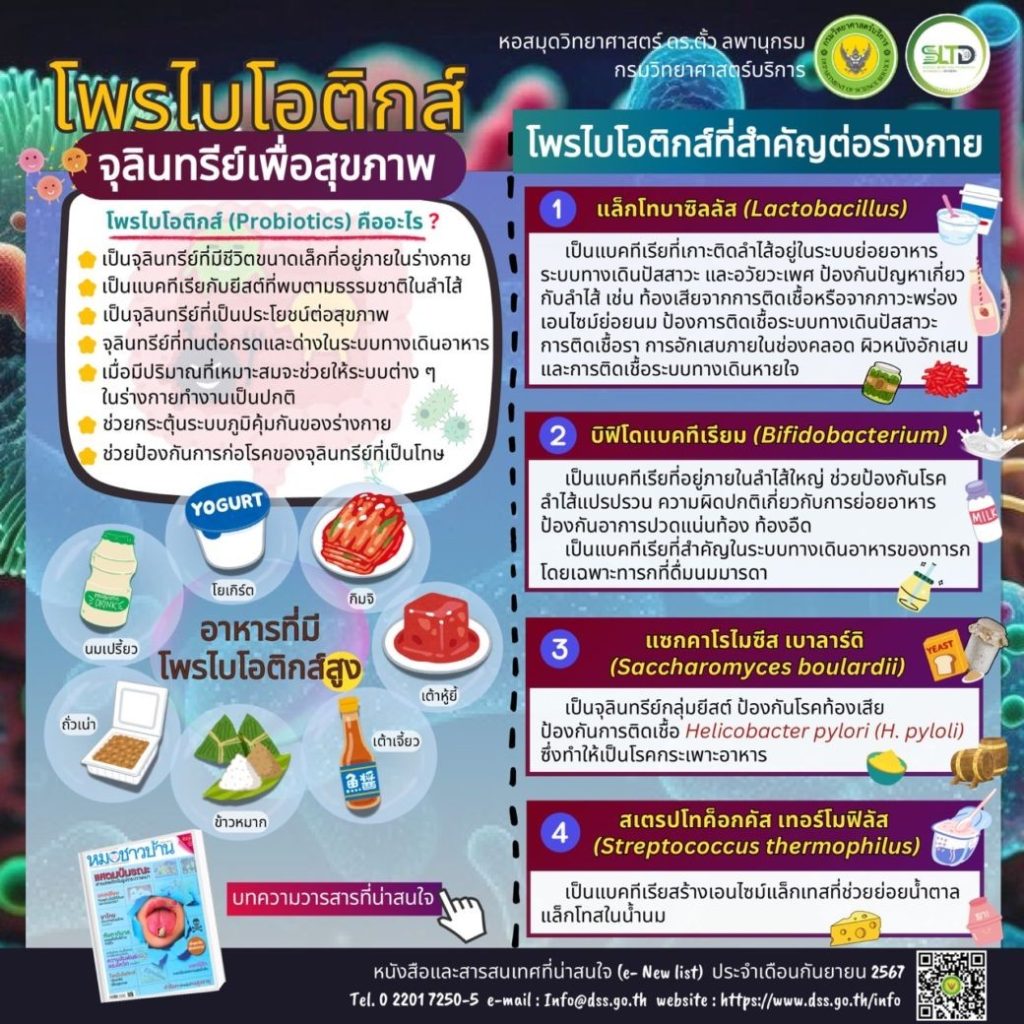
🥛🦠 When talking about “probiotics,” many people are familiar with them being found in fermented milk or yogurt. However, probiotics come in many different types, and some may be unfamiliar to you. Today, the Science Library of the Department of Science Service will introduce you to probiotics in more detail.
🦠 Probiotics are microscopic living microorganisms that reside in the body. They are naturally found in the intestines and can survive acidic and alkaline conditions in the digestive system. They can adhere to the intestinal lining and produce substances that inhibit harmful microorganisms. When present in appropriate amounts, probiotics help maintain normal bodily functions, stimulate the immune system, and prevent diseases caused by harmful microbes.
🦠 Important types of probiotics for the body include:
- Lactobacillus:
A type of bacteria that attaches to the intestinal lining and is found in the digestive, urinary, and reproductive systems. It helps prevent intestinal problems such as diarrhea caused by infections or lactose intolerance. It also helps prevent urinary tract infections, fungal infections, vaginal inflammation, skin inflammation, and respiratory infections.
Common sources include fermented foods, yogurt, and fermented milk. - Bifidobacterium:
A bacterium found in the large intestine that helps prevent irritable bowel syndrome (IBS) and digestive disorders such as bloating and abdominal discomfort. It is especially important in the digestive system of infants, particularly those who are breastfed.
It is commonly found in fermented dairy products such as yogurt and fermented milk. - Saccharomyces boulardii:
A probiotic yeast that helps prevent diarrhea and protects against infection by Helicobacter pylori (H. pylori), which can cause stomach ulcers.
It can be found in yeast-containing foods such as sourdough. - Streptococcus thermophilus:
A bacterium that produces lactase, an enzyme that helps digest lactose in milk.
It is found in fermented dairy products such as yogurt and cheese.
In addition, foods such as kimchi, fermented tofu, soybean paste, fermented rice (khao mak), and Japanese fermented soybeans (natto) are also rich in probiotics.
However, although probiotic-rich foods provide many health benefits, they should be consumed in appropriate amounts to maintain good health 💪
📖 For those interested in more details, please refer to the journal article:
“Probiotics: Microorganisms for Health,” Mor Chao Ban Journal, 2024, Vol. 46 (543), July, pp. 24–27. clickhere