


 Science Media Library
Scorching at 40 Degrees: How to Eat “Durian” in the Summer Without Risking Heatstroke?
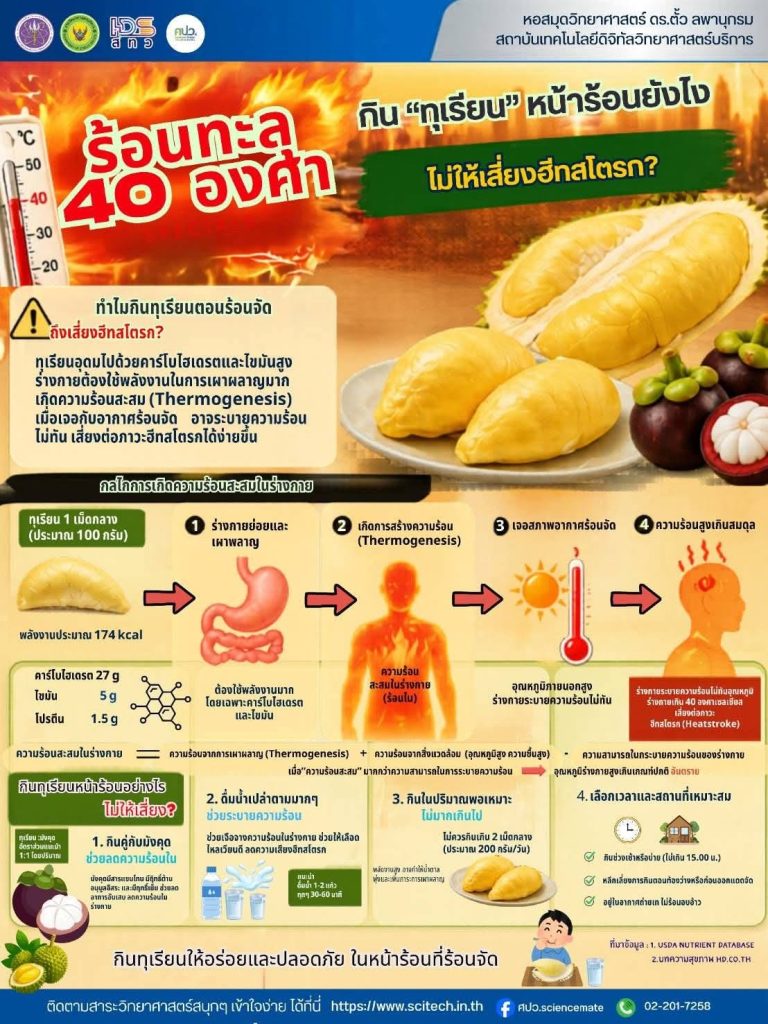
🚨 Warning for Foodies! How to eat “Durian” in the summer without risking heatstroke? 🌡️ Did you know that durian doesn’t just give you a “sore throat/internal heat” (ร้อนใน)? Scientifically speaking, the process of digesting the large amounts of carbohydrates and fats in durian triggers a body heat-generation process called “Thermogenesis.” 🔥 When internal heat collides with an outdoor temperature that is off the charts, our bodies can’t release heat fast enough, which can lead to dangerous situations. Today, STLC Science Mate breaks down the mechanism behind this accumulated body heat and compiles 4 great tricks for eating durian safely in the summer. How should you pair it with mangosteen, or what kind of water should you drink? Find out the answers in this infographic! 💛 #STLCScienceMate #Heatstroke #Durian #Thermogenesis #HealthKnowledge #FoodScience #DrTuaLapanukromScienceLibrary #FunScience
 Science Media Library
Hantavirus
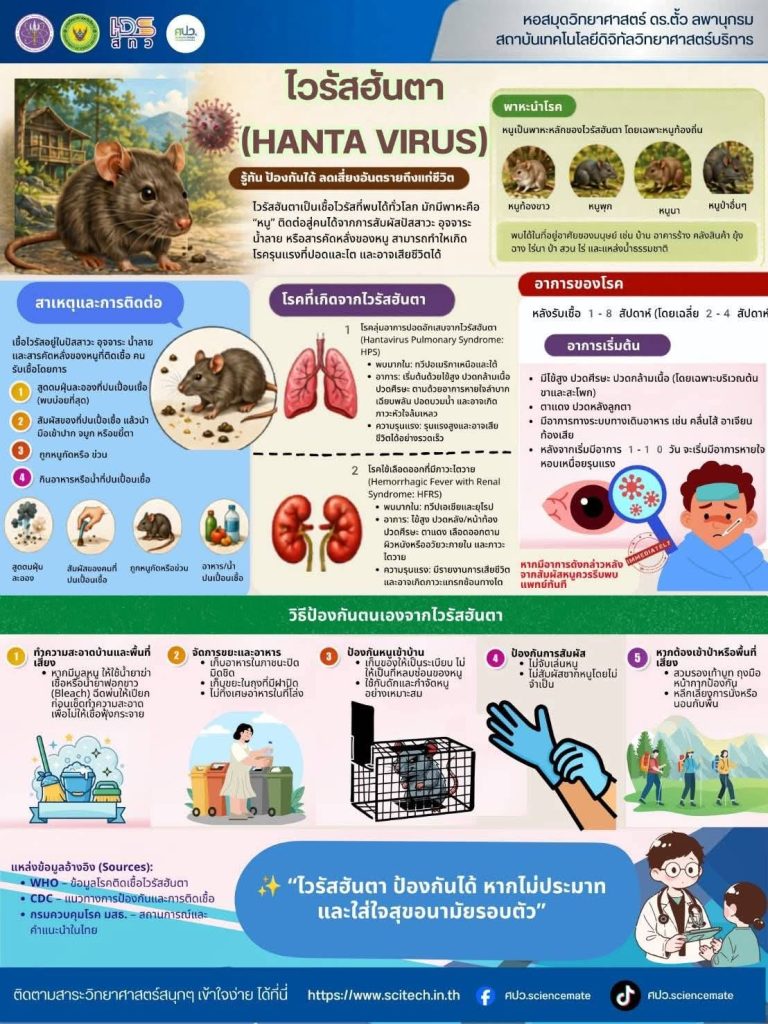
🛑 Beware! “Hantavirus”, the silent dust-borne threat that bookworms and homemakers must know about! 🐀💨 Hello, friends of STLC. Recently, there has been a wave of news about “Hantavirus” making many people anxious. Today, STLC Science Mate takes you on an in-depth exploration of this virus so we can “stay informed” and “protect” ourselves correctly. This virus is not a new strain, but a zoonotic disease (transmitted from animals to humans) with “rats/mice” as the primary carrier. The scary part is that if infected, it can lead to severe conditions like respiratory or kidney failure, and even death! STLC Science Mate has summarized all the essential facts you need to know: 1️⃣ How is it transmitted? (You can get infected without being bitten!) 🌪️ This is the core scientific point that most people misunderstand! The Hantavirus is shed in the urine, feces, and saliva of infected rodents. When these excretions dry up and mix with dust on room floors or in the nooks and crannies of bookshelves… When we clean up—such as dry sweeping or using a vacuum cleaner—the airflow causes the virus-laden dust to “become airborne (Aerosolization),” turning into microscopic droplets that we inhale deep into our lungs without…
 Science Media Library
Deadly Flash Drive: Wrong Plug, Ruined Life!
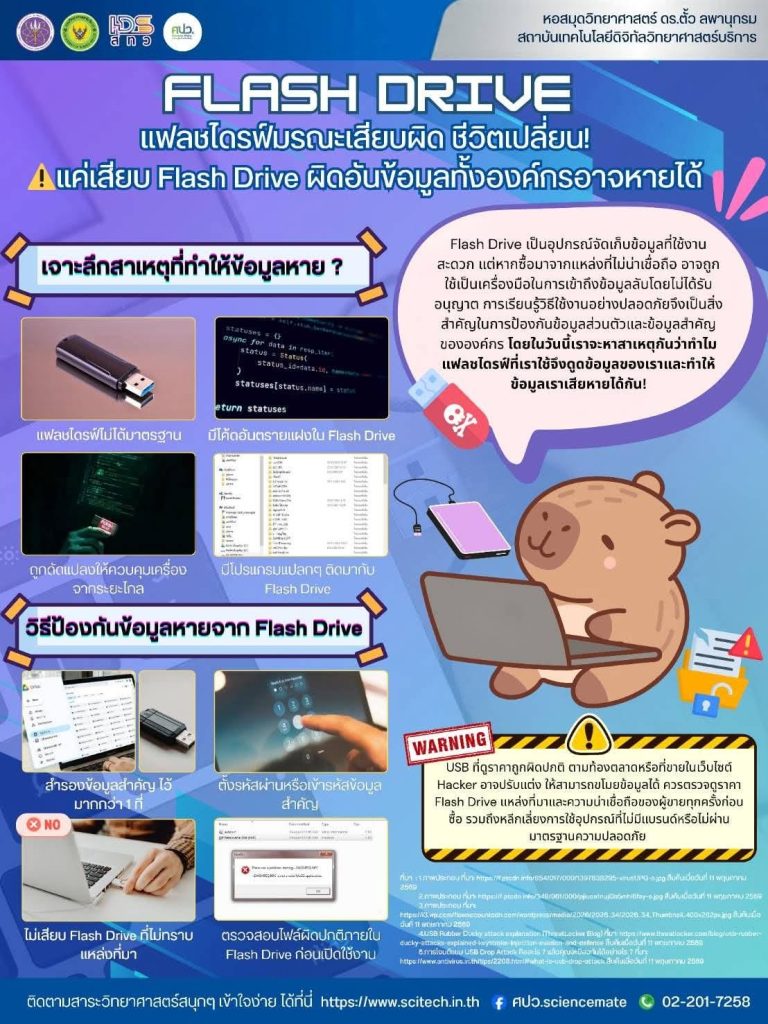
Just plugging in the wrong Flash Drive could wipe out your entire organization’s data. ⚠️ [Warning for Working Professionals] Deadly Flash Drive: Wrong plug, total data loss! ⚠️ If you find a lost Flash Drive or receive free promotional ones with a strange appearance, do not plug them into your computer under any circumstances! 💻🚫 Let’s look at 4 silent causes of data loss and 4 simple prevention methods everyone needs to know before it’s too late. 🔒 👉 Check out the prevention methods in this image! It’s definitely better to be safe than sorry. #ScienceMate #STLC #DrTuaLapanukromScienceLibrary #CyberSecurity #CyberWarning
 Science Media Library
Multi-Skilled Scientist: 1 Person, 2 Roles in an Era Where a Single Career Might Not Be Enough
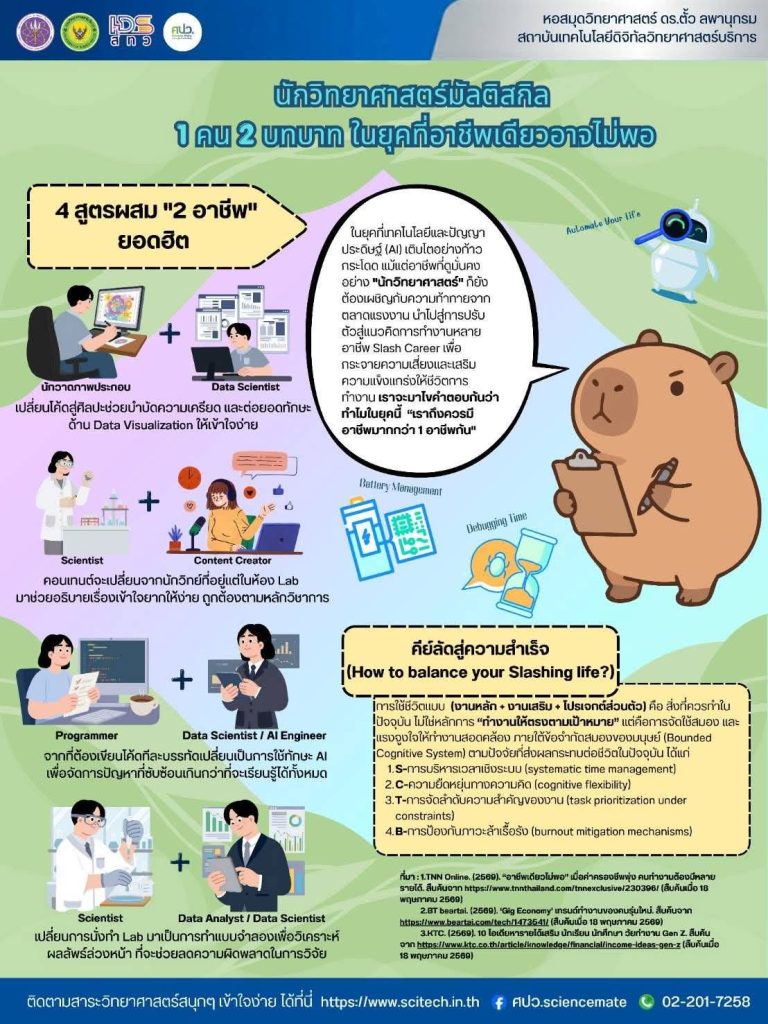
💡 Being just a scientist might not be enough anymore. What else do we need to be in this era? 🤔 When change happens fast, a single skill might not be enough to cope! Inviting fellow science enthusiasts to upskill with the concept of a “Multi-Skilled Scientist” (Slash Career): 1 person, 2 roles. Turn pressure into an opportunity to build new skills. 🧬✨ For any science enthusiast who wants to know which career combination suits them best and how to manage their life-work balance (S-C-T-B) to achieve success without burning out, swipe through this infographic right now! #SlashCareer #MultiSkilledScientist #SelfDevelopment #UpskillReskill #JackOfAllTrades #Scientist #DataScientist #ContentCreator #DrTuaLapanukromScienceLibrary #ScienceMate #STLC
 Science Media Library
Getting to Know Bundibugyo, the Latest Ebola Strain That WHO Just Declared an Emergency
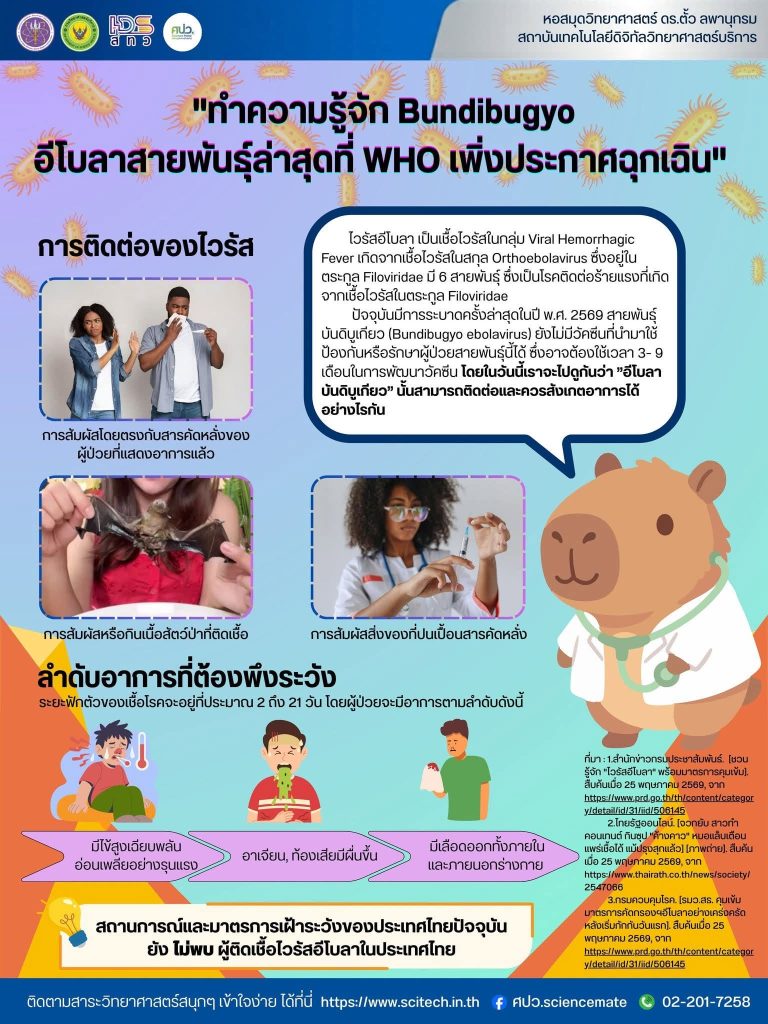
🚨 WHO declares an emergency! Get to know “Bundibugyo”, the latest strain of the Ebola virus 🦠 What is this virus? How scary is it? And how should we protect ourselves? Today, STLC (ศปว.) has summarized the essential information for you! Although there are currently no reported cases in Thailand and there is no vaccine available yet (it is currently under development), staying informed is the best form of protection. 📌 How is the infection transmitted? 📌 What are the symptoms we need to look out for? Come update your knowledge and get prepared together in this infographic! 👇 #STLC #Bundibugyo #Ebola #HealthUpdate #ScienceAroundUs
Scorching at 40 Degrees: How to Eat “Durian” in the Summer Without Risking Heatstroke?
🚨 Warning for Foodies! How to eat “Durian” in the summer without risking heatstroke? 🌡️ Did you know that durian doesn’t just give you a “sore throat/internal heat” (ร้อนใน)? Scientifically speaking, the process of digesting the large amounts of carbohydrates and fats in durian triggers a body heat-generation process called “Thermogenesis.” 🔥 When internal heat collides with an outdoor temperature that is off the charts, our bodies can’t release heat fast enough, which can lead to dangerous situations. Today, STLC Science Mate breaks down the mechanism behind this accumulated body heat and compiles 4 great tricks for eating durian safely in the summer. How should you pair it with mangosteen, or what kind of water should you drink? Find out the answers in this infographic! 💛 #STLCScienceMate #Heatstroke #Durian #Thermogenesis #HealthKnowledge #FoodScience #DrTuaLapanukromScienceLibrary #FunScience
Hantavirus
🛑 Beware! “Hantavirus”, the silent dust-borne threat that bookworms and homemakers must know about! 🐀💨 Hello, friends of STLC. Recently, there has been a wave of news about “Hantavirus” making many people anxious. Today, STLC Science Mate takes you on an in-depth exploration of this virus so we can “stay informed” and “protect” ourselves correctly. This virus is not a new strain, but a zoonotic disease (transmitted from animals to humans) with “rats/mice” as the primary carrier. The scary part is that if infected, it can lead to severe conditions like respiratory or kidney failure, and even death! STLC Science Mate has summarized all the essential facts you need to know: 1️⃣ How is it transmitted? (You can get infected without being bitten!) 🌪️ This is the core scientific point that most people misunderstand! The Hantavirus is shed in the urine, feces, and saliva of infected rodents. When these excretions dry up and mix with dust on room floors or in the nooks and crannies of bookshelves… When we clean up—such as dry sweeping or using a vacuum cleaner—the airflow causes the virus-laden dust to “become airborne (Aerosolization),” turning into microscopic droplets that we inhale deep into our lungs without…
Deadly Flash Drive: Wrong Plug, Ruined Life!
Just plugging in the wrong Flash Drive could wipe out your entire organization’s data. ⚠️ [Warning for Working Professionals] Deadly Flash Drive: Wrong plug, total data loss! ⚠️ If you find a lost Flash Drive or receive free promotional ones with a strange appearance, do not plug them into your computer under any circumstances! 💻🚫 Let’s look at 4 silent causes of data loss and 4 simple prevention methods everyone needs to know before it’s too late. 🔒 👉 Check out the prevention methods in this image! It’s definitely better to be safe than sorry. #ScienceMate #STLC #DrTuaLapanukromScienceLibrary #CyberSecurity #CyberWarning
Multi-Skilled Scientist: 1 Person, 2 Roles in an Era Where a Single Career Might Not Be Enough
💡 Being just a scientist might not be enough anymore. What else do we need to be in this era? 🤔 When change happens fast, a single skill might not be enough to cope! Inviting fellow science enthusiasts to upskill with the concept of a “Multi-Skilled Scientist” (Slash Career): 1 person, 2 roles. Turn pressure into an opportunity to build new skills. 🧬✨ For any science enthusiast who wants to know which career combination suits them best and how to manage their life-work balance (S-C-T-B) to achieve success without burning out, swipe through this infographic right now! #SlashCareer #MultiSkilledScientist #SelfDevelopment #UpskillReskill #JackOfAllTrades #Scientist #DataScientist #ContentCreator #DrTuaLapanukromScienceLibrary #ScienceMate #STLC
Getting to Know Bundibugyo, the Latest Ebola Strain That WHO Just Declared an Emergency
🚨 WHO declares an emergency! Get to know “Bundibugyo”, the latest strain of the Ebola virus 🦠 What is this virus? How scary is it? And how should we protect ourselves? Today, STLC (ศปว.) has summarized the essential information for you! Although there are currently no reported cases in Thailand and there is no vaccine available yet (it is currently under development), staying informed is the best form of protection. 📌 How is the infection transmitted? 📌 What are the symptoms we need to look out for? Come update your knowledge and get prepared together in this infographic! 👇 #STLC #Bundibugyo #Ebola #HealthUpdate #ScienceAroundUs