


🛑 Beware! “Hantavirus”, the silent dust-borne threat that bookworms and homemakers must know about! 🐀💨
Hello, friends of STLC. Recently, there has been a wave of news about “Hantavirus” making many people anxious. Today, STLC Science Mate takes you on an in-depth exploration of this virus so we can “stay informed” and “protect” ourselves correctly.
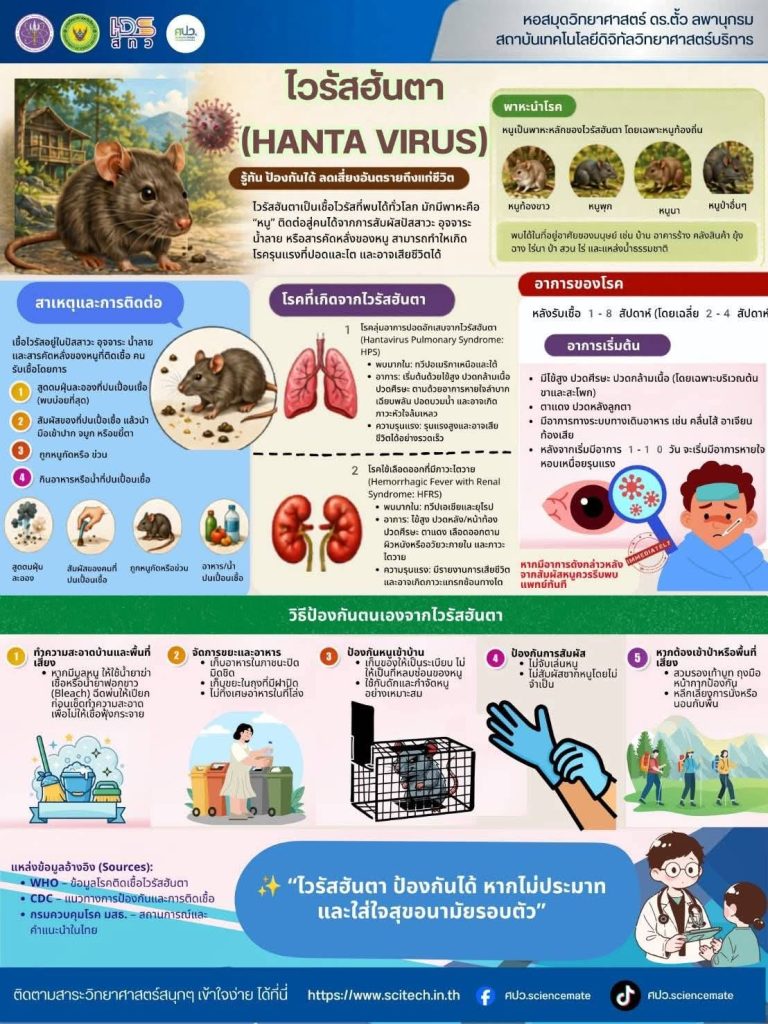
This virus is not a new strain, but a zoonotic disease (transmitted from animals to humans) with “rats/mice” as the primary carrier. The scary part is that if infected, it can lead to severe conditions like respiratory or kidney failure, and even death!
STLC Science Mate has summarized all the essential facts you need to know:
-
1️⃣ How is it transmitted? (You can get infected without being bitten!) 🌪️
This is the core scientific point that most people misunderstand! The Hantavirus is shed in the urine, feces, and saliva of infected rodents. When these excretions dry up and mix with dust on room floors or in the nooks and crannies of bookshelves…
When we clean up—such as dry sweeping or using a vacuum cleaner—the airflow causes the virus-laden dust to “become airborne (Aerosolization),” turning into microscopic droplets that we inhale deep into our lungs without realizing it! This is the most common route of infection.
(Other less common routes include eating food contaminated with rodent droppings or direct contact with open wounds).
-
2️⃣ Check symptoms immediately! (Resembles the flu in the early stages) 🌡️😷
Symptoms typically appear about 1–8 weeks after exposure:
-
Early stage: High fever, severe muscle aches (especially in the thighs and back), chills, and fatigue.
-
Severe stage (may develop 4–10 days after early symptoms): Coughing, shortness of breath (severe lung damage) or severe lower back pain, low urine output, and skin bleeding (kidney damage).
-
-
3️⃣ Comprehensive ways to protect yourself! 🛡️♻️
The best prevention is to organize your home so it doesn’t become a habitat for rodents!
-
✅ The golden rule for cleaning cluttered areas/bookshelves: “Never dry sweep” under any circumstances! Wear a mask and gloves, then use a disinfectant spray (alcohol or bleach mixed with water) to thoroughly wet the area. Leave it for 5–10 minutes to prevent dust and viruses from scattering, then use a damp cloth to wipe it clean instead. 🧽💦
-
✅ Seal entry points: Block holes or gaps in walls and floors to prevent rodents from entering.
-
✅ Store food securely: This includes pet food, so it does not become a food source for rodents.
-
Understanding these scientific mechanisms helps us live safely without panicking. Save this post and share it with family members so everyone cleans their homes the right way! 👇✨
#STLCScienceMate #Hantavirus #ScienceAroundUs #HomeCleaning #Hygiene #Bookworms #StayInformed #DrTuaLapanukromScienceLibrary