


😷 Air pollution and haze are major issues today that everyone encounters, whether during travel or even while cooking in daily life. We are constantly exposed to air pollutants. Therefore, campaigns and cooperation to prevent open burning have been strongly promoted. Today, the Science Library of the Department of Science Service will discuss the dangers of smoke from biomass burning, to raise awareness and highlight the importance of reducing burning 👀
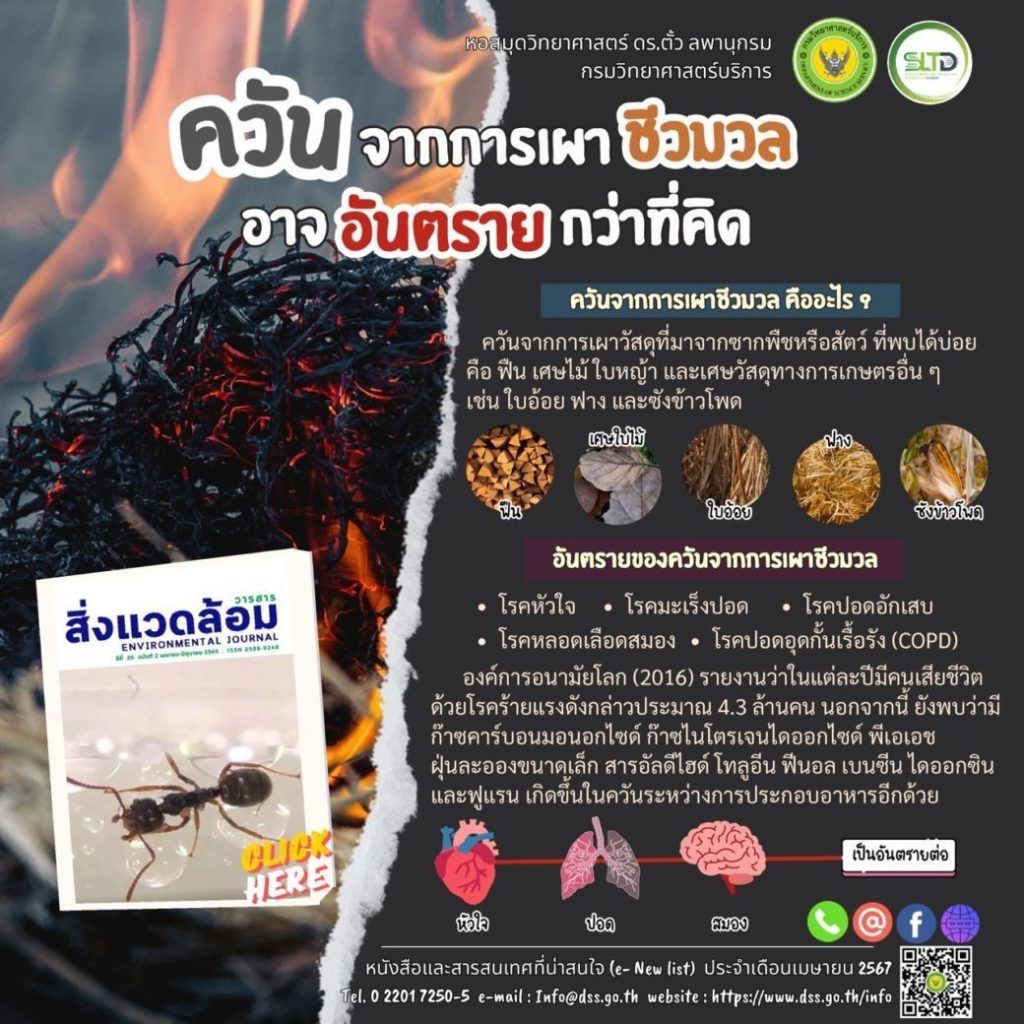
🔥 Biomass burning smoke refers to smoke produced from burning materials derived from plants or animals. Common examples include firewood, wood chips, grass, and agricultural residues such as sugarcane leaves, rice straw, and corn cobs.
🔥 Biomass burning smoke contains hundreds of toxic substances that are harmful to health. The most common include fine particulate matter, carbon monoxide, nitrogen oxides, and carcinogens such as benzene, formaldehyde, and polycyclic aromatic hydrocarbons (PAHs).
In addition, cooking can produce what is known as “cooking oil fumes” (COF) or cooking fumes, which are generated when oil is heated beyond its boiling point and evaporates into vapor. These fumes contain fine particulate matter, PAHs, formaldehyde, acetaldehyde, and benzene. The amount of toxic substances depends on the cooking temperature and the type of oil used. Deep-frying and the use of vegetable oils tend to produce more pollution compared to using coconut oil, lard, or cooking methods such as boiling and steaming.
📢 Prevention and control measures
- Implement strict control measures on open burning
- Avoid burning during periods of poor air circulation, which usually occur in the early morning or evening
- If burning is necessary, use dry agricultural waste or materials with low moisture content, as they produce less pollution than wet materials
- Raise public awareness and promote understanding of the impacts of smoke from burning
📖 For those interested in more details, please refer to the journal article:
“Smoke from Biomass Burning May Be More Dangerous Than You Think,” Environmental Journal, 2022, Vol. 26(2), April–June, pp. 1–7. clickhere
📗 You can also follow recommended books and information (e-New list) for April 2024 at:
https://www.dss.go.th/a/qr/HYhNa
or access services via the “Information System of the Department of Science Service.” clickhere
For more information, please contact the One Stop Service at the Science Library.